If you’ve read our previous blog post, you already know that we spoke with many job-seeking workers in Limburg. This was part of our research into the needs and expectations of active jobseekers in the region. However, our research wasn’t limited to jobseekers. We also talked to employers in Limburg. Why? To gain deeper insights into the challenges HR departments and recruiters face when hiring new workers for open positions.
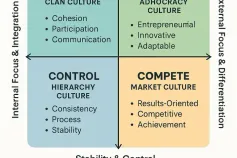
During these conversations, many different topics came up. The one we discuss in this blog post is organizational culture — more specifically, what it actually means. It’s a topic that came up with every employer and played an important role in their recruitment process. In a future post, we’ll discuss how organizational culture influences the attraction of new workers and how the cultural fit of a potential employee can be measured. But before we can do that, we first need to define what ‘organizational culture’ really is.
When we look up the word ‘organizational culture’ in a dictionary, we find a few definitions. Here are some examples: “The way employees within a company interact with each other and with external parties.”, “The set of written and unwritten rules, values, norms, and beliefs shared among employees that shape their behavior, including their interactions with customers and other stakeholders.”, and “The collection of norms, values, and behaviors shared by members of an organization that bind them to each other and to the organization.” What elements do we see repeated? Behavior and interaction, shared values and norms, and how these bind employees together and create a shared identity.
Now that we’ve broken down the term organizational culture into several understandable elements, we can better see the impact a positive or negative culture can have. A strong culture helps employees collaborate better, feel more engaged, and align with the organization’s values and norms. Conversely, a negative culture can lead to tension, hiring challenges, or turnover.
Organizational culture should not be underestimated. That’s why, in our upcoming blog posts, we’ll dive deeper into questions such as:
- How can I measure my organizational culture?
- How does organizational culture influence the recruitment process?
- How can I assess a candidate’s cultural fit?